



If you’ve got a toddler, the term busy body takes on a whole new meaning. Their hands are always moving, their minds are always racing, and somehow they still have energy left at the end of the day.
At this stage, we’re all juggling a lot. We want toys and books that actually hold our kids’ attention, support their growing skills, and don’t end up forgotten after a week. We’re trying to keep up with those busy little minds while being thoughtful about what comes into our homes.
That’s why I put together this list of subscription boxes that have been genuinely helpful in this season. They’re designed to meet toddlers where they are, with activities and books that grow alongside them and fit into real, everyday routines. If you’re in the thick of toddler life too, I hope this gives you a few solid options to lean on!
Best Toddler Subscription Boxes in 2026:
 Koala Crate by KiwiCo
Best Overall
Starting at $24.00Get KiwiCo Bookroo
Best for Books
Starting at $19.95Get Bookroo Lovevery
Best for Developmental Play
Starting at $80.00Get Lovevery Little Passports: Craft Discovery
Best for Global Exploration
Starting at $22.00Active DealGet 25% off Craft Discovery's 6 & 12-month plans!Use Coupon Code CRAFT25AFFGet Little Passports.jpg) The Preschool Box
The Preschool BoxBest for Structured Learning
Starting at $42.95Get The Preschool Box
The 5 Best Subscription Boxes for Toddlers in 2026
1. Koala Crate by KiwiCo
Best Overall
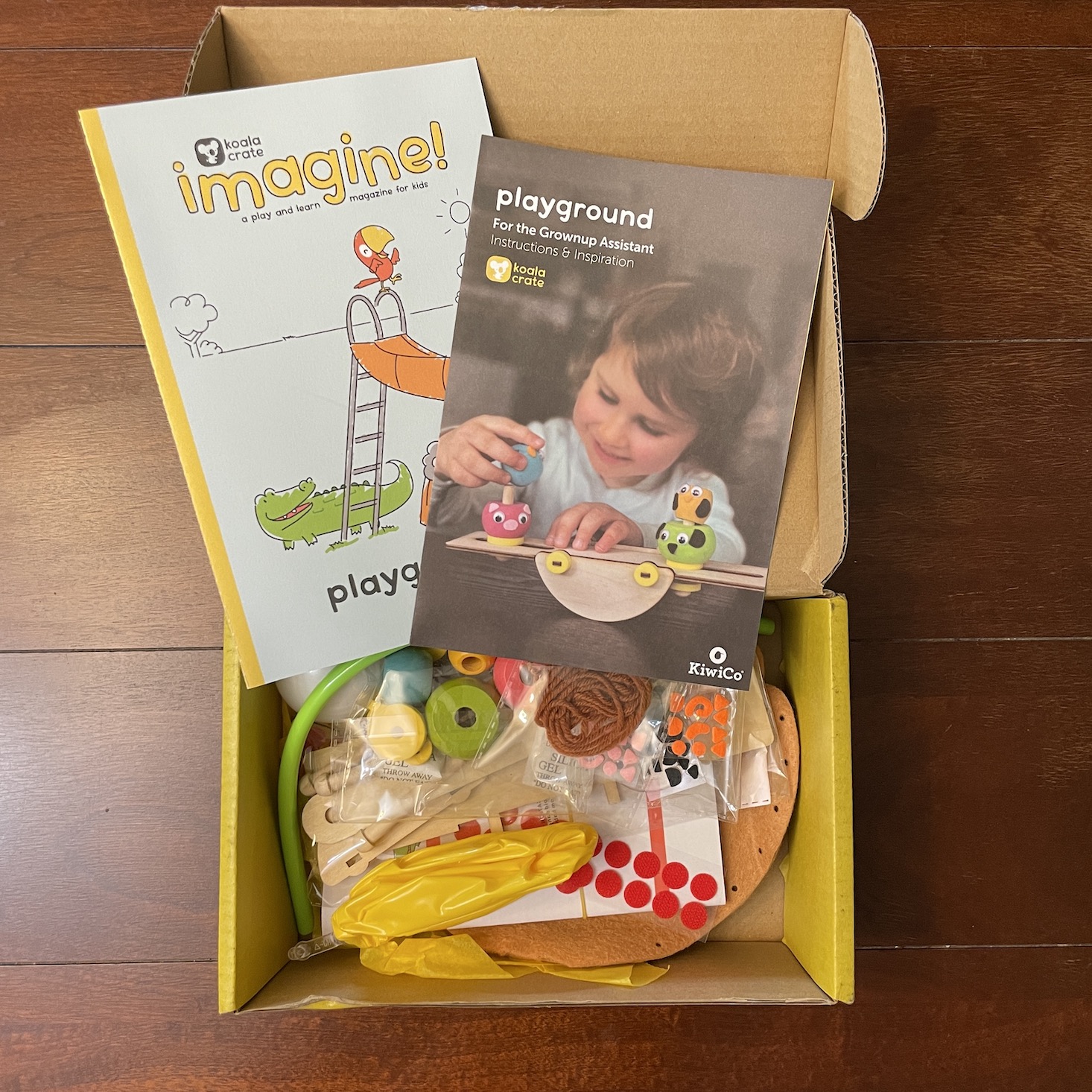
Image via our review.
Koala Crate works well for toddlers who like to build first and play after. Each box centers on one theme and gives you a small, contained activity instead of a pile of random pieces.
You’ll usually start with a simple build or craft, then use what you made as part of pretend play. That might mean snapping parts together, decorating pieces, or assembling something that moves or gets reused in different ways. The setup takes about 10–20 minutes, and once that part is done, kids can keep playing without much direction.
What makes Koala Crate easy to come back to is how reusable the projects are. Some kids get really into the building, others jump straight into pretending, and the themes tend to work for a wide range of personalities without feeling targeted. It’s a solid, flexible option that fits naturally into everyday play.
2. Bookroo
Best for Books
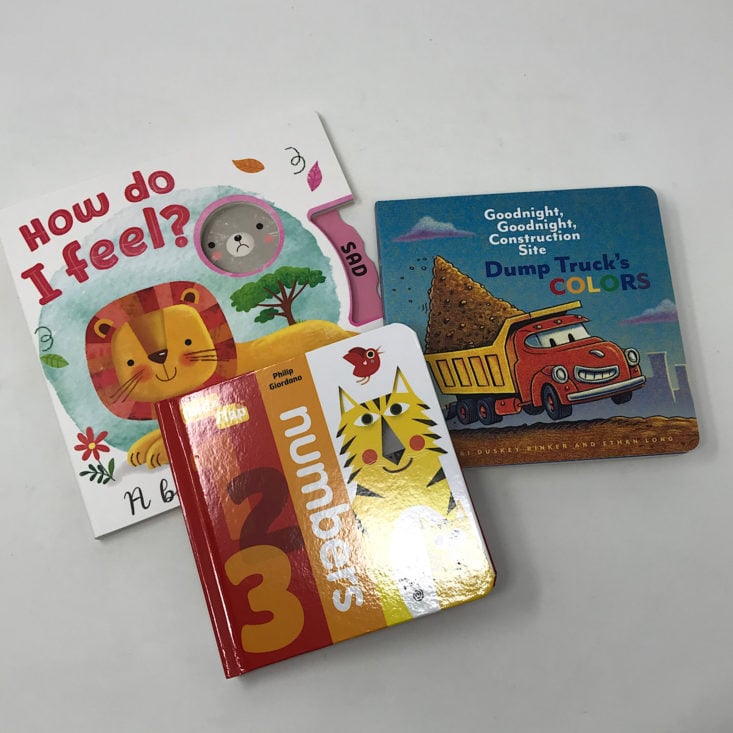
Image from our review.
Bookroo sends a small, curated set of books that are actually appropriate for toddlers, not a random grab bag of titles. Each delivery includes two to three books, either board books or picture books, and they’re sized for short attention spans and repeated reading.
What makes Bookroo useful is how easily the books fold into everyday routines. They’re sturdy enough for independent flipping, engaging enough for bedtime, and short enough to pull out during the day without it feeling like a whole event. If you want a steady stream of books that actually get read, this one does the job.
3. Lovevery
Best for Developmental Play
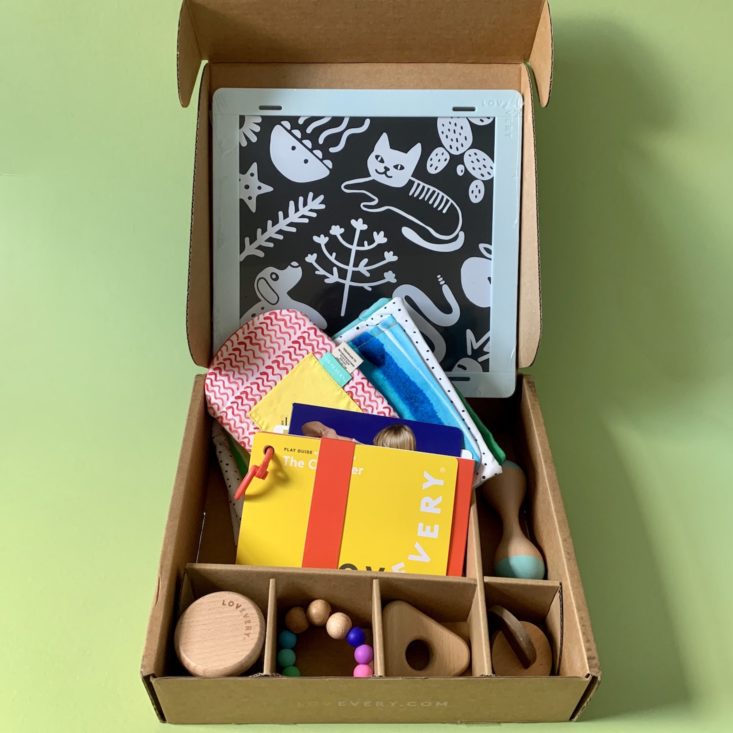
Image from our review.
Lovevery stands out because of how the toys feel the moment you take them out of the box. These are solid, well-made pieces that have some weight to them, not lightweight plastic or quick crafts. Most of what you’ll get is wood, thick cardboard, or fabric, and everything is built to hold up to repeated use.
A typical box includes a small set of toys like chunky wooden puzzles, stacking or sorting pieces, and toys with moving parts to slide, open, or rotate. There’s no project to complete and no setup required. The toys are meant to live on a shelf and get picked up over and over again, sometimes used “correctly,” sometimes not, and sometimes just explored for how they feel and move.
What makes Lovevery different is how long these toys stick around. They don’t scream for attention, but they also don’t get tossed aside after a day. Many parents notice the toys getting rediscovered as their toddler grows, especially when skills start to click. If you care about having fewer toys that are sturdy, calm, and worth keeping, Lovevery fits that approach well.
4. Little Passports
Best for Global Exploration

Image from our review.
Little Passports centers around themes of travel, place, and discovery, giving toddlers a hands-on way to learn about the world. The first box introduces the experience with a kid-sized suitcase, a world map, and a passport, which all become part of the routine as future boxes arrive.
Each delivery builds on that foundation by spotlighting a different destination. Over time, kids might explore places like France, Brazil, Egypt, Japan, or Australia through a mix of visuals and simple activities. Boxes usually include stickers to add to the map, cards with photos and easy-to-digest facts, small keepsake-style items, and short booklets that introduce animals, landmarks, food, or daily life in each country.
What makes Little Passports especially engaging for toddlers is the sense of continuity. The suitcase, map, and passport get reused month after month, and kids begin to recognize patterns as they add new places to what they already have. It’s a great fit for toddlers who enjoy themes, collecting, and talking about where things are, even in an early, playful way.
5. The Preschool Box
Best for Structured Learning
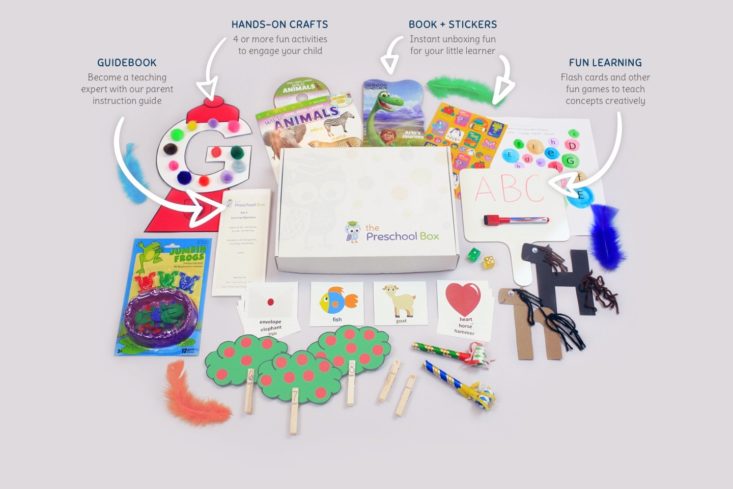
Image via The Preschool Box.
The Preschool Box is a more education-forward subscription, which is why it’s commonly used by both homeschooling families and those who want extra learning support alongside traditional preschool. It’s designed to walk toddlers through early academic concepts in a clear, organized way, without expecting you to design lessons yourself.
Each box focuses on a specific theme and skill set, and the activities are meant to be worked through over several days. Inside, you’ll typically find materials for practicing letter recognition and sounds, counting and number sense, shapes, colors, early writing strokes, and fine motor skills. Activities might include matching games, cut-and-paste crafts, tracing pages, simple board games, and hands-on manipulatives that help reinforce the lesson.
What makes The Preschool Box especially useful is how guided it feels. The parent guide explains what each activity is targeting and suggests an order, so you’re not guessing what to do next or how long to spend on it. This box works well if you like having intentional sit-down learning time built into your routine and want a steady way to work on foundational preschool skills without pulling together resources on your own.


Please do not enter your email address in the Name field or in the comment content. Your email address will not be published. Required fields are marked *. Remember to post with kindness and respect. Comments with offensive language, cruelness to others, etc will not be approved. See our full comment policy here.