



Toilet paper was one of those things I always bought on autopilot. As a mom of four, I’m buying a LOT of toilet paper, so I'd look at the cheapest option, maybe glance at the softness, throw a pack into my cart, and move on.
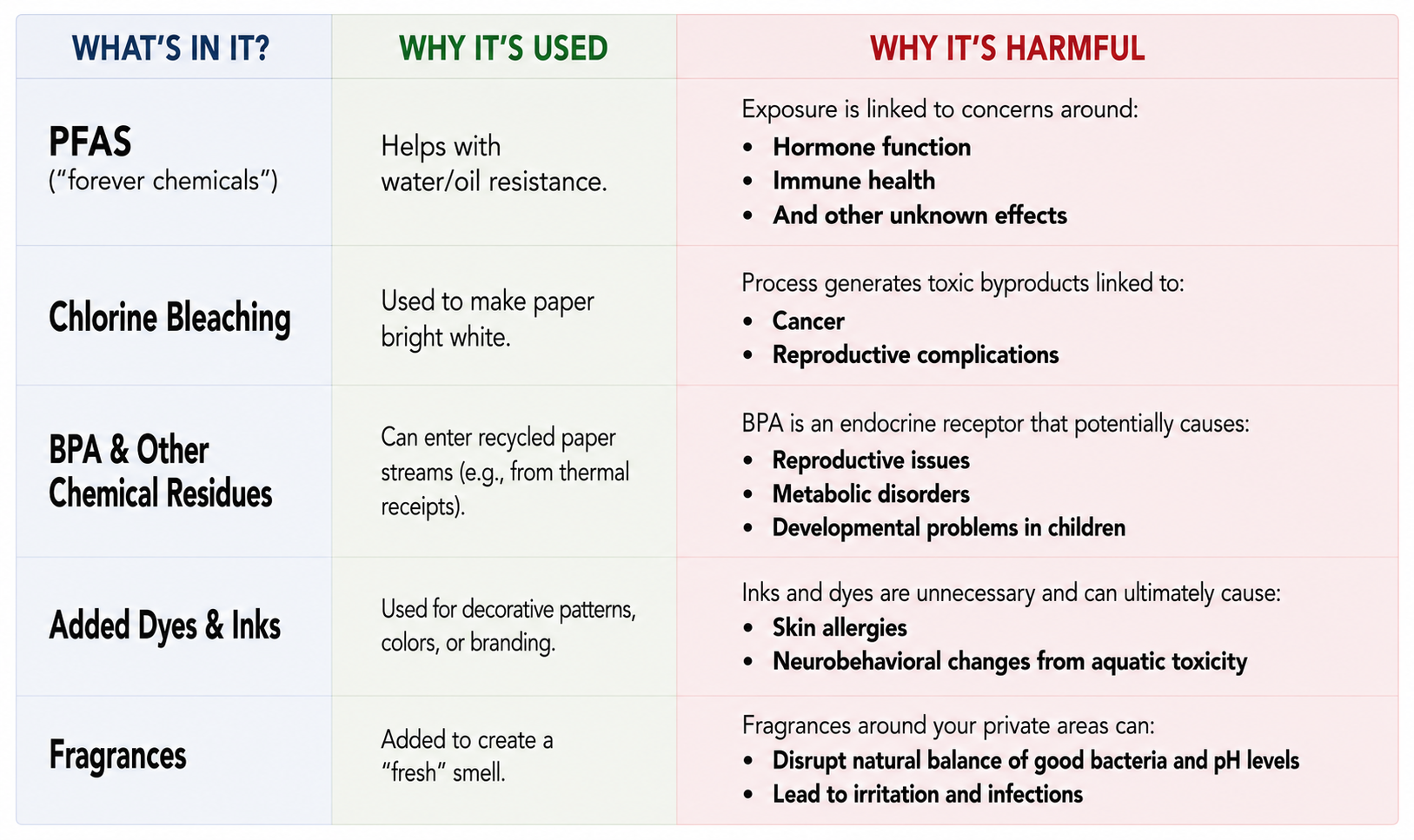
But recently, I kept seeing more conversations online about the ingredients and additives found in everyday products - from skincare to feminine care products like tampons and now toilet paper. With four kids in the house using the bathroom multiple times a day, I started thinking about what exactly our family was using so often. Especially as a woman, what I wipe with can have an impact on my health because the skin of the vulva can absorb things more easily than other parts of the body. That sent me down a rabbit hole through all areas of the internet to see what was really in the big brand TP I've been using, and which brands had the cleanest rolls for the best price. Here’s what I found and the better alternative that people are recommending:
❌ The Harmful Ingredients Hiding in Some Big Brand TP
✅ Why Who Gives a Crap Is the Safer Brand (and One You Can Trust)
When trying to find the right brand to use instead, I was floored at how many people on the internet were recommending Who Gives A Crap. The first thing that caught my attention was their commitment to ingredient/manufacturing transparency. From what I found through several sources, they have no PFAS added, no inks or dyes, are fragrance free, hypoallergenic, dermatologically tested, sensitive skin friendly, BPA free, and do not use chlorine bleach. When something comes into contact with you and your kids’ skin multiple times a day, it's reassuring to know it was produced thoughtfully.
💡 A Small Lifestyle Change That Makes a Big Difference
In case you were curious how Who Gives A Crap stacked up against the mega corporation brands in other aspects of TP - it clears them in most categories. Here’s a summary of my findings from my personal experience and online reviews:
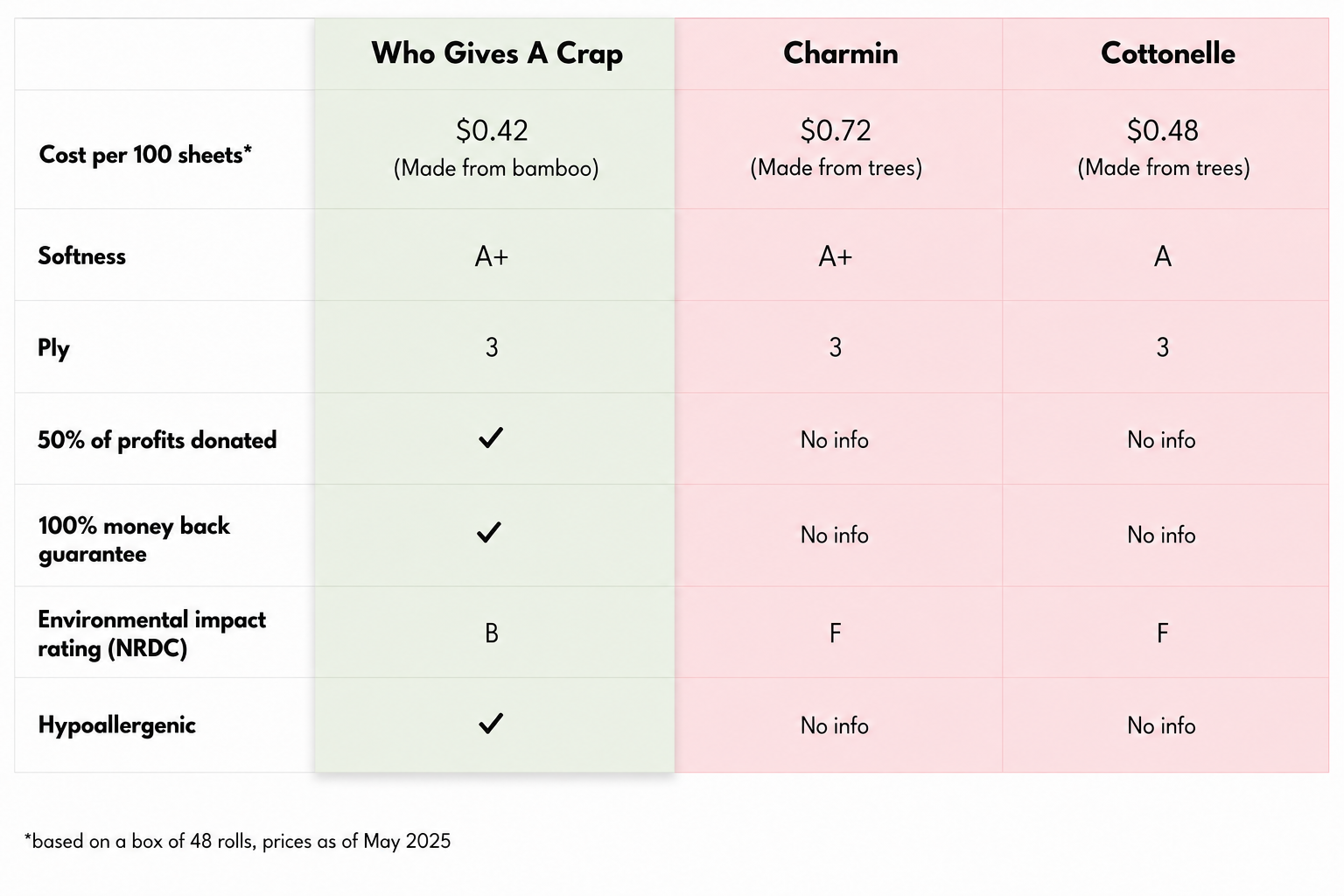
Cost and environmental impact are just as important to me. Usually, you’d expect to pay more for a sustainable option, but Who Gives A Crap’s mega rolls last up to 2x longer than normal rolls and cost just 42 cents per 100 sheets. Their bamboo toilet paper can save a single person an average of $135 a year, and with 48 rolls in a box, I won’t have to think about restocking for a long time.
💰 Better For Your Wallet AND The Planet
And the environmental impact makes the switch even more worthwhile. One million trees are cut down daily to make traditional toilet paper, while these 100% bamboo rolls help reduce deforestation. I also love that Who Gives A Crap puts its money where its mission is, donating 50% of its profits to improve access to clean water and sanitation. It’s an easy everyday swap that feels better for both your bum and the planet.
Sources:
[1] https://www.naturopathy-uk.com/news/blog/2023/01/13/is-your-toilet-paper-toxic/
[2] https://www.ewg.org/news-insights/news-release/2023/03/study-toilet-paper-major-source-toxic-forever-chemicals


